Bringing operational reality to technology governance.
AI governance draws on legal, academic, policy and technical expertise. ITS adds an operational perspective shaped by the realities of running consequential systems and critical infrastructure at scale, where authority, escalation, intervention and accountability must work in practice.
What ITS is, in four parts
Emerging technology is moving from supporting decisions toward participating in consequential decisions and actions. Governance often stops at principles, policy and compliance. ITS works the operational layer: authority, evidence, intervention, accountability and resilience.
Critical infrastructure, where a wrong action has real-world consequences. Telecom is the initial domain of operational depth, with methods adapted for energy, cloud, data centres and other essential services.
AI governance and human oversight now; the convergence with cybersecurity and operational resilience next; the post-quantum transition and infrastructure trust on the horizon. See the focus areas.
As one operating loop, not separate departments: investigate the problem, challenge it with practitioners, codify the findings into frameworks, teach the methods, implement them with organisations, and carry the evidence back into research.
One loop, six stages
Each stage feeds the next, and evidence from practice returns to research rather than ending in a report.
Telecom network operations centres provide a long-running example of how highly automated systems can be operated with defined human authority, escalation and accountability.
The Institute for Technology Stewardship was founded on a practical observation: as AI systems become more autonomous, governance principles must be translated into operational decisions. Organisations need to know who holds authority, when a person must intervene, what evidence must be preserved and how accountability continues when systems act at machine speed. ITS brings experience from telecom and critical-infrastructure operations into this conversation, complementing legal, academic, policy and technical expertise with the perspective of those responsible for keeping consequential systems operating safely.
ITS exists to close that gap. We translate operational lessons from network operations, air-traffic control and other critical-infrastructure environments into practical, measurable governance frameworks that complement legal, academic, policy and technical work.
We work globally, monitor relevant standards and policy processes, and contribute practitioner evidence through public consultations, collaborative initiatives and other open participation mechanisms.
A world where technology operates transparently, accountably, and always within the boundaries of meaningful human stewardship. As systems grow more autonomous, human judgment remains at the centre of consequential decisions.
To advance the governance of autonomous and emerging technology by bridging operational expertise with policy research, developing frameworks, publishing evidence and contributing operational perspectives through relevant standards, policy and public-consultation processes.
"The Organisations that have governed automation and human decision-making at scale hold important lessons for emerging technology governance."
Five values
Practitioner-Led
Governance insights grounded in real-world operational experience, not theory alone.
Evidence-Based
Frameworks backed by data, case studies, and empirical analysis.
Globally Inclusive
Perspectives that represent the Global South and emerging economies.
Human-Centred
Technology must serve people. Autonomy must not replace accountability.
Standards-Driven
Contributing to measurable, interoperable, implementable frameworks.
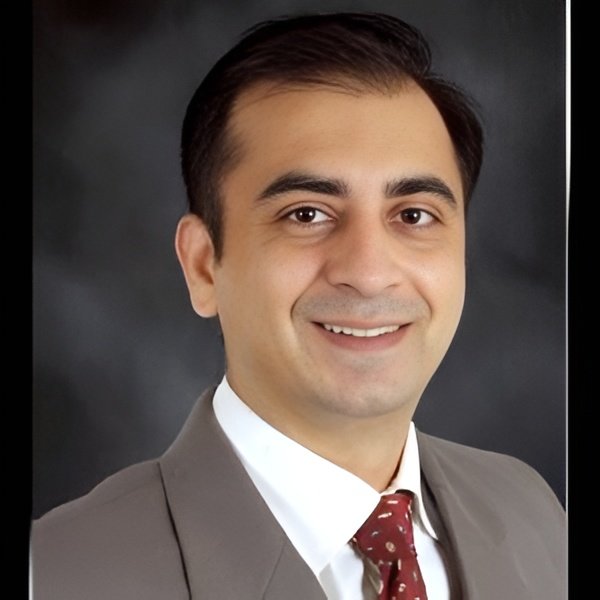
Gaurav Arora
Founder & Director · Institute for Technology Stewardship
Gaurav Arora brings more than 20 years of experience across telecom, IT service delivery and critical operational environments, where automation, real-time decision-making, escalation and continuous service accountability must work together.
His current work examines how these operational disciplines can inform the governance of increasingly autonomous AI systems. ITS's direct operational foundation is telecom and IT service delivery; its research also draws comparative lessons from aviation, cybersecurity, safety engineering and other critical-infrastructure environments.
Today his work focuses on AI governance research and on contributing practitioner perspectives through public consultations, collaborative initiatives and other open processes. He is also the founder of Whizzstep, an AI education, research and innovation venture.
Contribution before title
ITS is developing external participation through focused practitioner review and substantive contribution rather than a standing panel of names. People from telecom operations, cybersecurity, law, audit, risk, safety engineering, policy and adjacent fields help test whether governance concepts survive contact with real-world practice.
Any future formal advisory roles will follow demonstrated contribution; they will not be used primarily as branding, and will be announced only once they exist.
Contribute to the work →Engaging across standards, policy and practice
Our research is informed by published regulations, standards, frameworks and policy materials from leading institutions. We reference these sources to maintain technical and regulatory discipline, and contribute operational perspectives through public consultations and other open processes where appropriate. These references indicate sources informing our work; they do not imply formal affiliation or institutional endorsement.
Frameworks and institutions referenced in our work: ITU · IEEE · NIST · ISO/IEC
See the standards landscape →